

Microbe Food Waste Process
Keywords:
Affiliated Classification:
Enterprise Environmental Protection

Counseling:
Microbe Food Waste Process
Product Details
Why food waste treatment is needed
● In the context of the 'dual-carbon' target, scientific management and policy assessment based on data to promote the resourceful utilization of food waste and low-carbon management is a direction worth focusing on and exploring
● According to the United Nations, about one-third of the world's food is wasted or discarded every year, and 8-10% of global greenhouse gas emissions are related to it, which weighs the equivalent of 1.3 billion tons and causes economic losses of up to about $1 trillion.
● Due to the improvement of the living standard, the waste on the dining table has become more and more obvious, and a large amount of kitchen waste is produced every day. The amount of food waste generated in China's cities is up to more than 90 million tons per year, which is a reusable resource, but for a long time, the actual treatment rate of waste is less than 20%.
● At present, the phenomenon of illegal collection, transportation and disposal of kitchen waste still persists in China, and a large amount of kitchen waste is still flowing to illegal channels, posing a serious threat to food safety and creating a blind spot for environmental protection.
● Food waste is not only a matter of food security and resource wastage, but also a huge detriment to climate change and the ecosystem. From the source of food waste to the back-end disposal of food waste, it generates environmental pollution and greenhouse gases.
On-site treatment of food waste
Problems and Hazards:
● Kitchen waste contains a lot of water and oil, is large and heavy, and has high transportation costs
● Leakage during transportation, spillage of leachate generates a bad odor that affects the environment
● Dispose of kitchen waste on-site to avoid the breeding of bacteria, mosquitoes and rodents due to accumulation
● Hazardous pollution of the environment, affecting the cityscape
● Spreading disease and endangering human health
Solution:
● Realization of waste treatment at source and daily waste disposal
● The equipment is easy to operate and requires only 1-2 people
● Oil-water separation, gas and water discharge
● Crushing kitchen waste into less than 2mm pieces, 95% reduction of kitchen waste
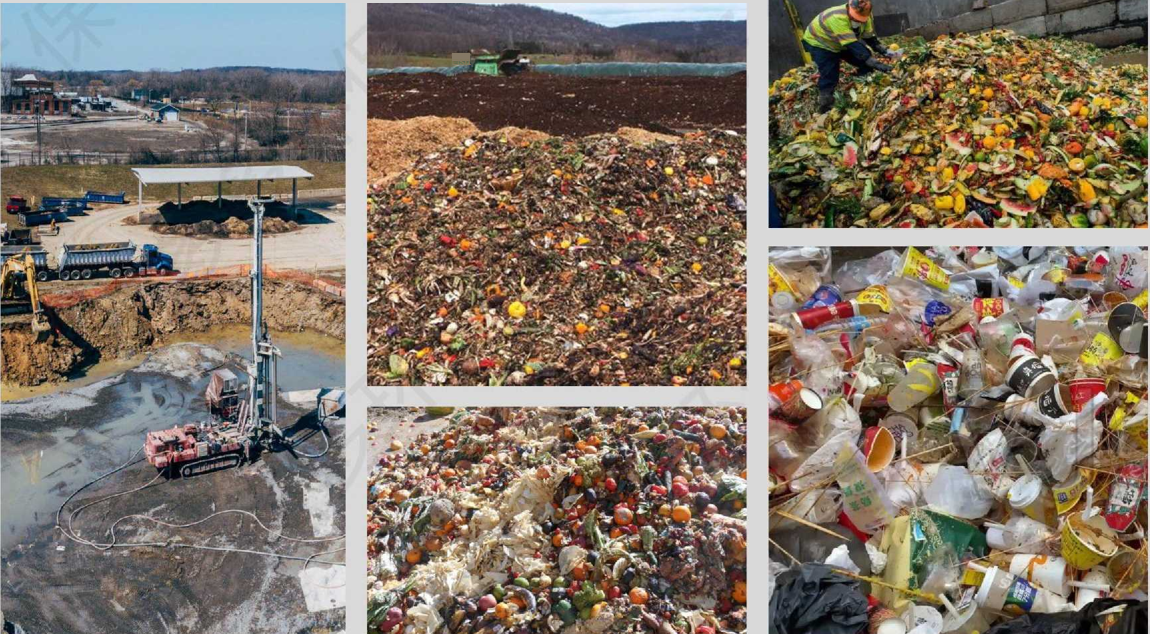
The Garbage Siege Crisis
● The rate of harmless disposal is less than 6%, and large quantities of garbage are piling up on the outskirts of cities, so that two-thirds of the country's cities are surrounded by garbage.
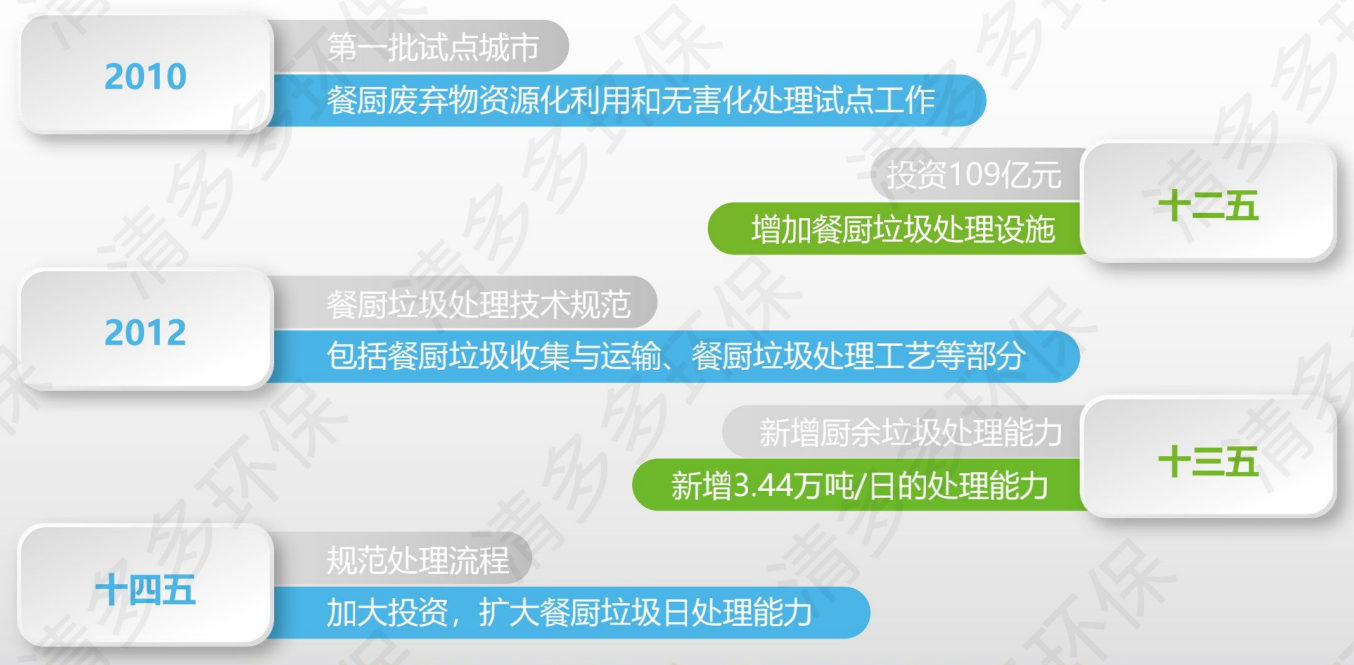
Government-driven policies
● Utilization rate of garbage resources: By the end of 2025, the utilization rate of urban domestic garbage nationwide will reach about 60%.
● Garbage classification and collection capacity: By the end of 2025, the national domestic garbage classification and collection capacity will reach about 700,000 tons/day, and counties with conditions are encouraged to promote the construction of domestic garbage classification and treatment facilities.
● Waste incineration treatment capacity: By the end of 2025, the national urban domestic waste incineration treatment capacity will reach about 800,000 tons per day, and the urban domestic waste incineration treatment capacity will account for about 65%.
Kitchen Waste Disposal Policy
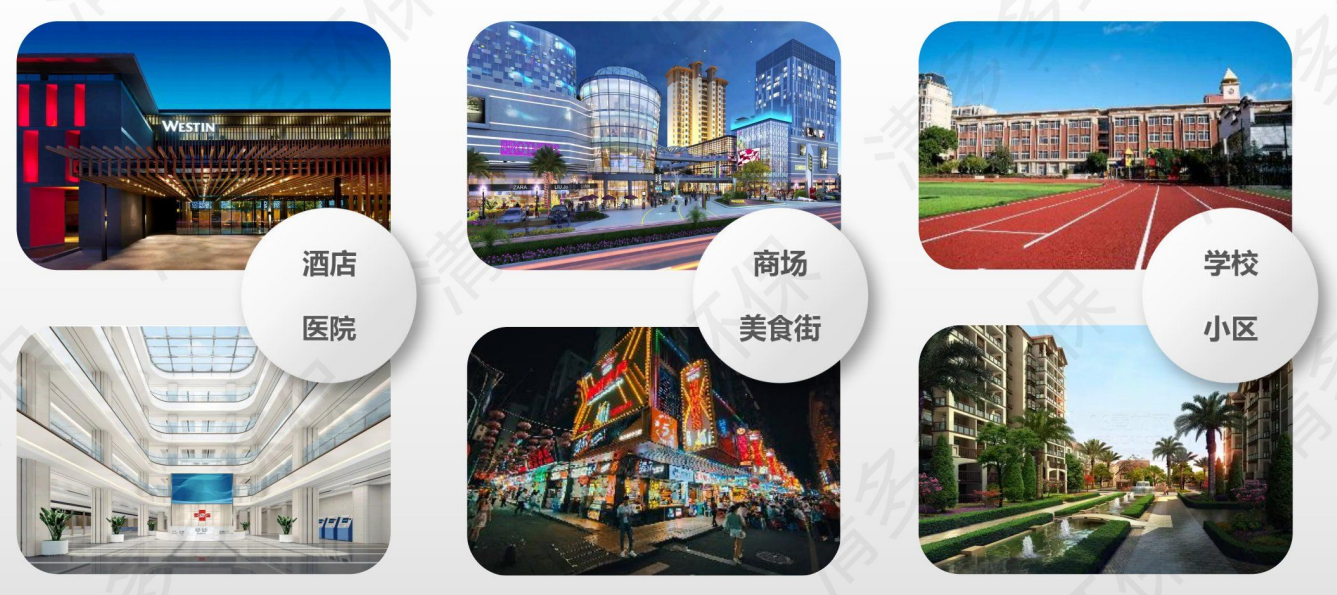
Applicable places
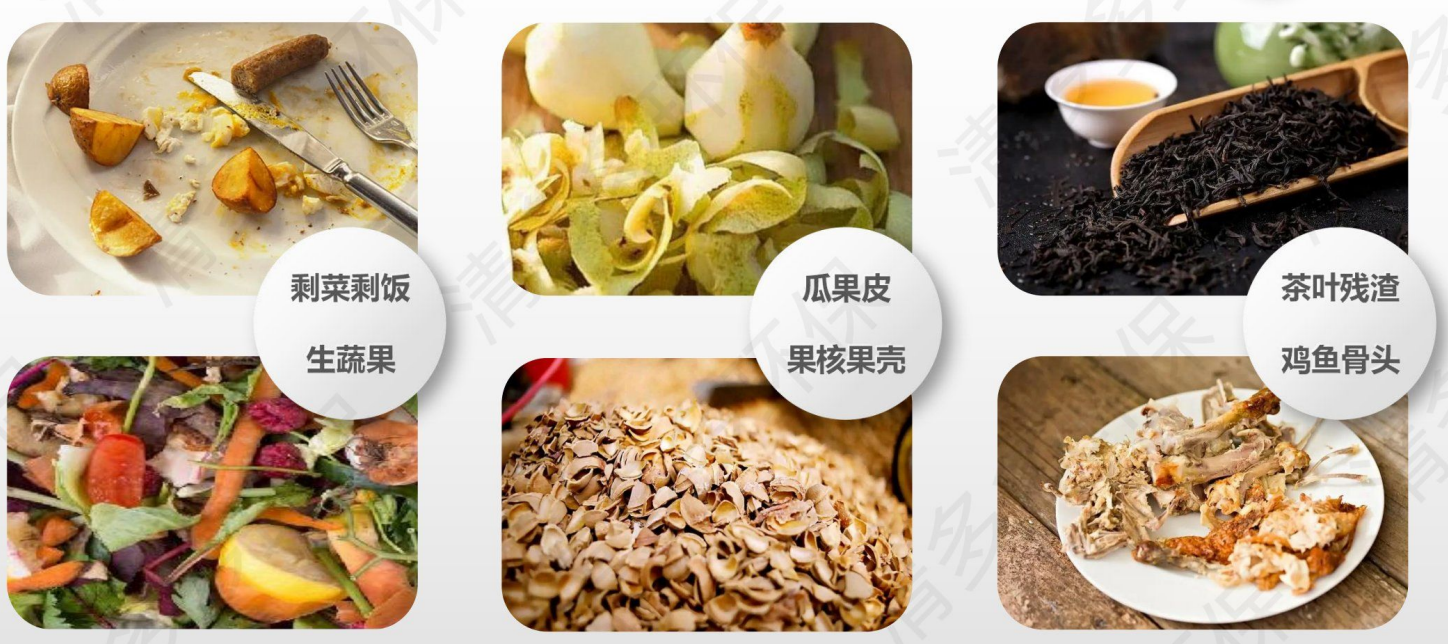
Scope of application
Shellfish should not be put in
Equipment Appearance
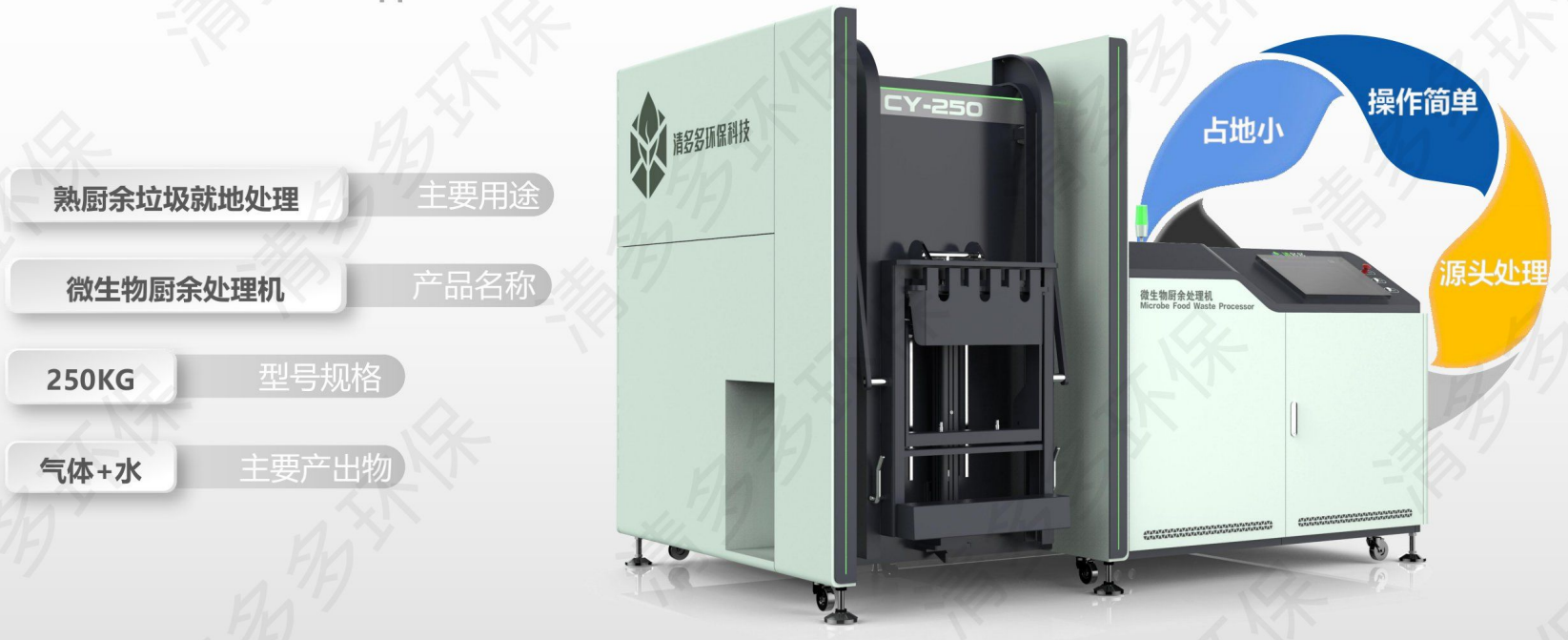
Equipment Advantage
• On-site treatment for daily production and cleaning • Reduction of human transportation costs • Less worries about emissions • Reduces the production of odorous mosquitoes • Intelligent monitoring is easy to operate
Equipment parameters
| Product Model | Model Specification | Number of applicants |
zoosome (per/KG) |
bacterial weight (per/KG) |
daily handling capacity (per/KG) |
Bacteria Monthly Consumption (moon/KG) |
Applicable places |
|
CY- 250 |
250Kgw |
500〜700人 |
25KG |
2.5KG |
150KG |
4.5KG |
Communities, hotels, businesses, factories, schools |
| CY- 500 | 500Kgw | 800〜1200人 | 50KG | 5KG | 300KG | 9KG | |
|
CY- 1000 |
1000Kgw |
1500A |
100KG |
10KG |
600KG |
18KG |
|
Parameter/Product Specification |
CY- 250 |
|
Rated voltage(V) |
380 |
|
Applicable temperature(°C) |
40 〜60 |
|
Applicable humidity(%) |
40-60 |
|
processing time(h) |
8〜24 |
|
Attrition rate(%) |
>95% |
|
Processing capability(kg/d) |
150 |
|
Bacterial weight(kg/per) |
2.5 |
|
Equipment Size(mm) |
L2500*W1680*H1800 |
|
Equipment(m2) |
4.2 |
|
Suggested dimensions for garbage room(m2) |
19 (Includes aisles, empty space for trash cans) |
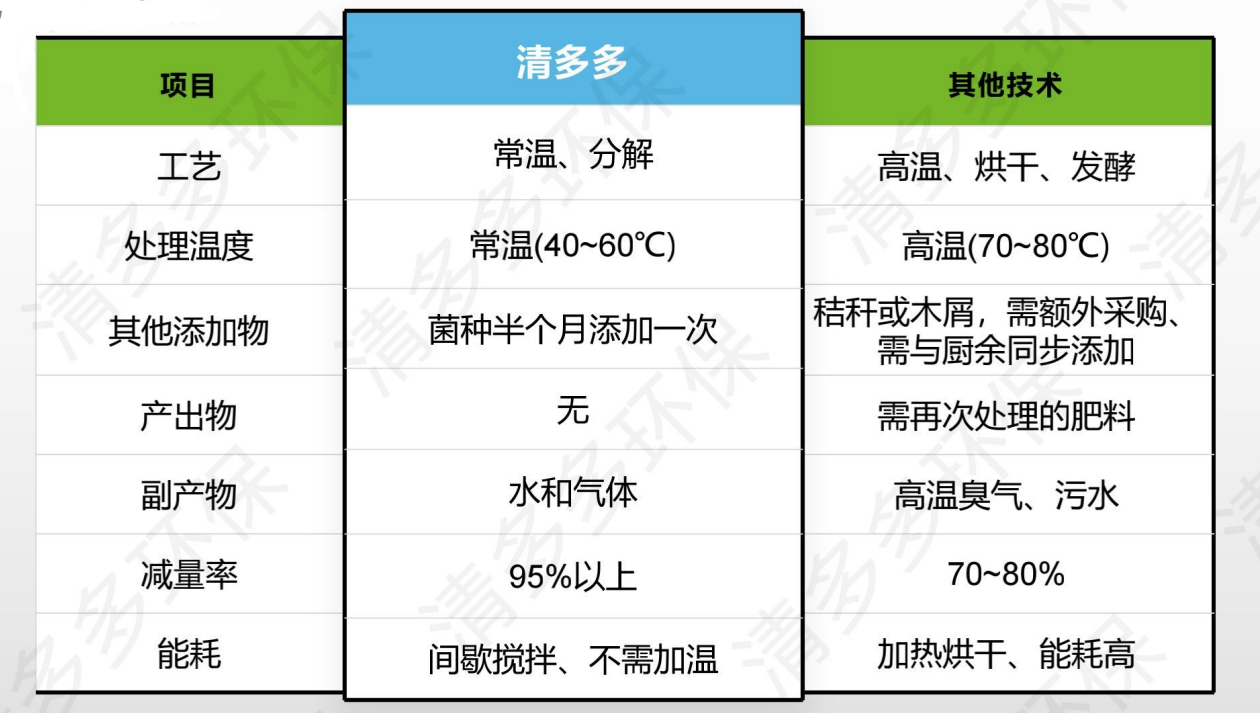
Product Comparison
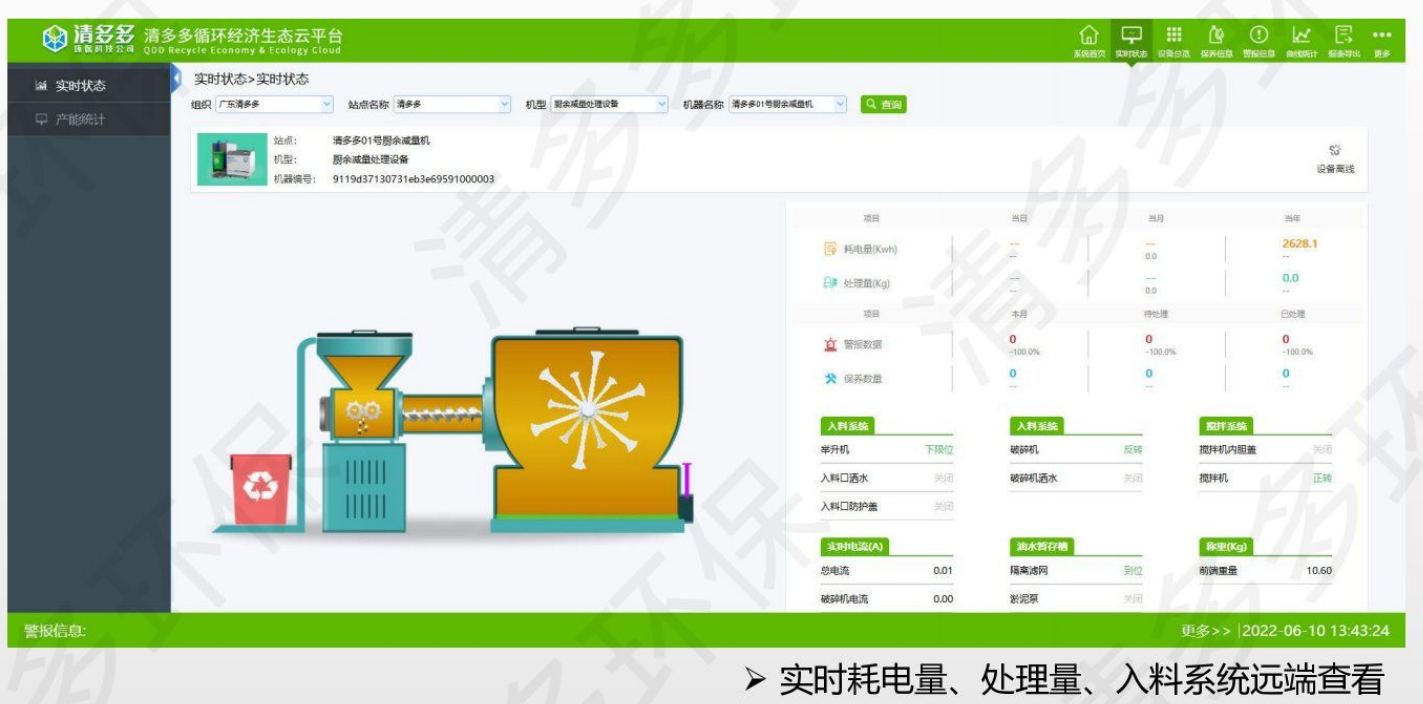
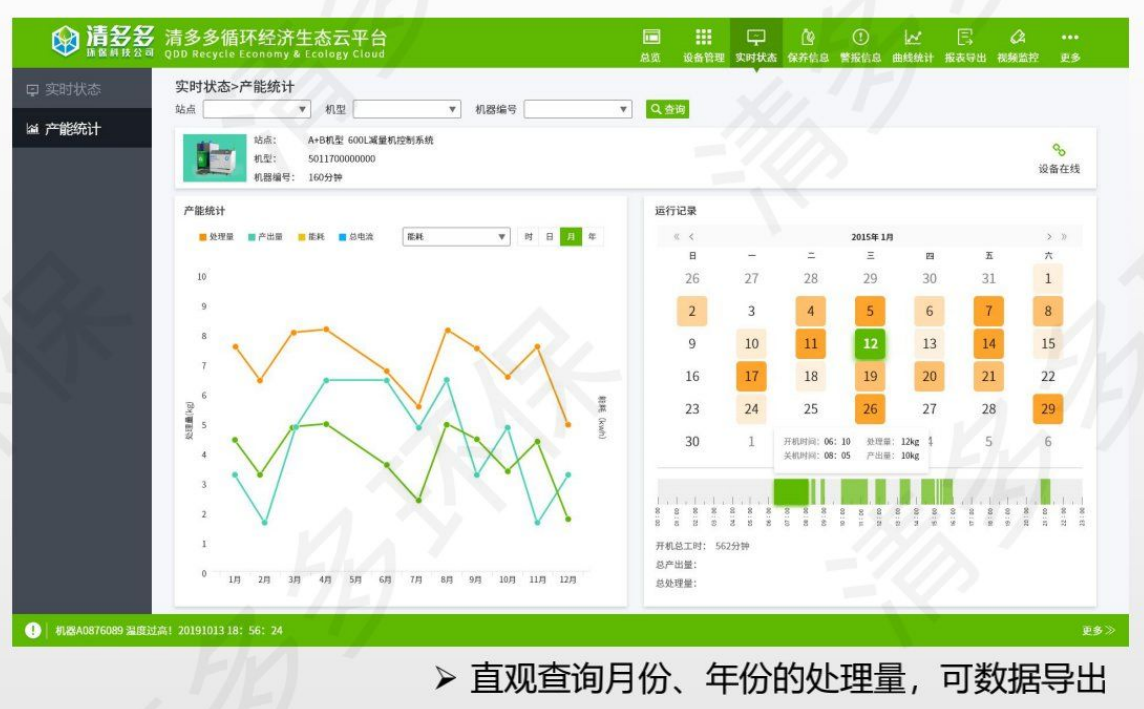
PLC interface
Q&A
Q: How often do I add a bacteria?
A: Add it once in half a month.
Each addition needs to be activated >> Bacteria:Water:Brown Sugar = 1:5:10, activate for 3-4 hours, mix directly with food waste, keep the temperature at about 60 degrees and humidity at about 50%.
Q:Space requirements.
A: Height (including trash can lifting height): 3 meters, 380V, water supply, close to septic tanks
Q:Is there a limit to the garbage I can throw?
A: Preliminary sorting is required. Plastic, rope, chopsticks, shells and glass are not allowed.
Q:What to do after crushing?
A:After crushing, the material becomes less than 2MM & water is discharged to septic tank.
Q:How to dump the food waste in?
A: First simple wet and dry material separation, hang the garbage can on the equipment, a key to rise the garbage can to the crushing mouth crushed after oil and water separation.
Q:Will there be personnel training?
A: We will send staff to install the equipment and explain how to operate and use it Q: How to deal with dirty oil?
A: You can get someone to collect it regularly, and it can be used for making soap, aviation oil and so on.
Q: Can I use both 120L/240L trash cans?
A: Yes.
Q: How long is the processing time?
A: Converts cooked food waste into gas and water in just 8-24 hours
Q: How does the machine work?
A: Oil-water separation + crushing + biological bacteria decomposition
Q:Can we eliminate the odor problem?
A: In the hot summer, food waste will rot and stink as long as it is left at room temperature for half a day. The microbial food waste machine's way is to digest the food waste produced on the same day and discharge it, there is no problem of leaving it for a long time.
Q: How much can be processed?
A: Based on the fact that each person will produce 0.18KG of food waste per day, it is equivalent to a 250KG equipment that can process the food waste of about 500~700 people at one time.
Q: Can we reduce the volume of garbage?
A: Food waste accounts for 1% of the garbage. If you don't want to run after the garbage truck every day or go to the garbage room for a "walk" after dinner, you can choose a model that effectively reduces the volume of food waste, or a biodegradable model that directly converts food waste into sewage, so that you don't need to take it to the trash again.
Q: How do I choose a model?
A: In the 3R's of environmental protection (Reduce, Reuse, Recycle), we should consider "Reduce Use", "Make the Best Use of What You Have", and "Recycle" before disposing of food waste. Among them, composting the leftover food waste can be a perfect translation of "recycling".
However, if you live in an apartment or don't have the habit of planting, it would be time-consuming and troublesome to invest in the cost of turning food waste into compost and then throw it away in the end. We recommend that you choose the "ideal end of food waste" according to your needs.
"Ideal endings for food waste". For example, turning food waste into sewage that is odorless and can be drained away directly may be more suitable for people who do not need to compost.
preceding page
next page
preceding page
next page
Related Products


online message
WeChat Contact
Contact Us
Address: Unit 201, Floor 2, No.3, No.7 Xinhui Road, Wusha Community, Daliang Street, Shunde District, Foshan City